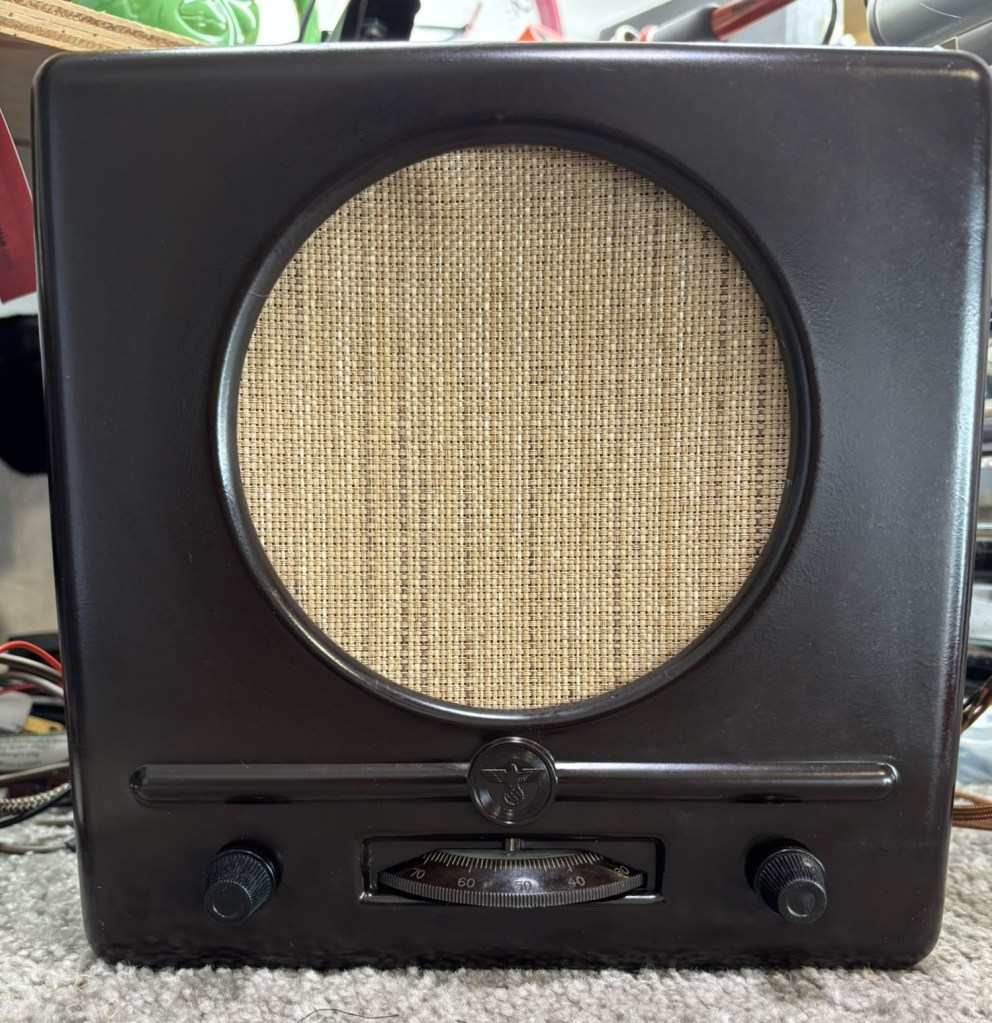
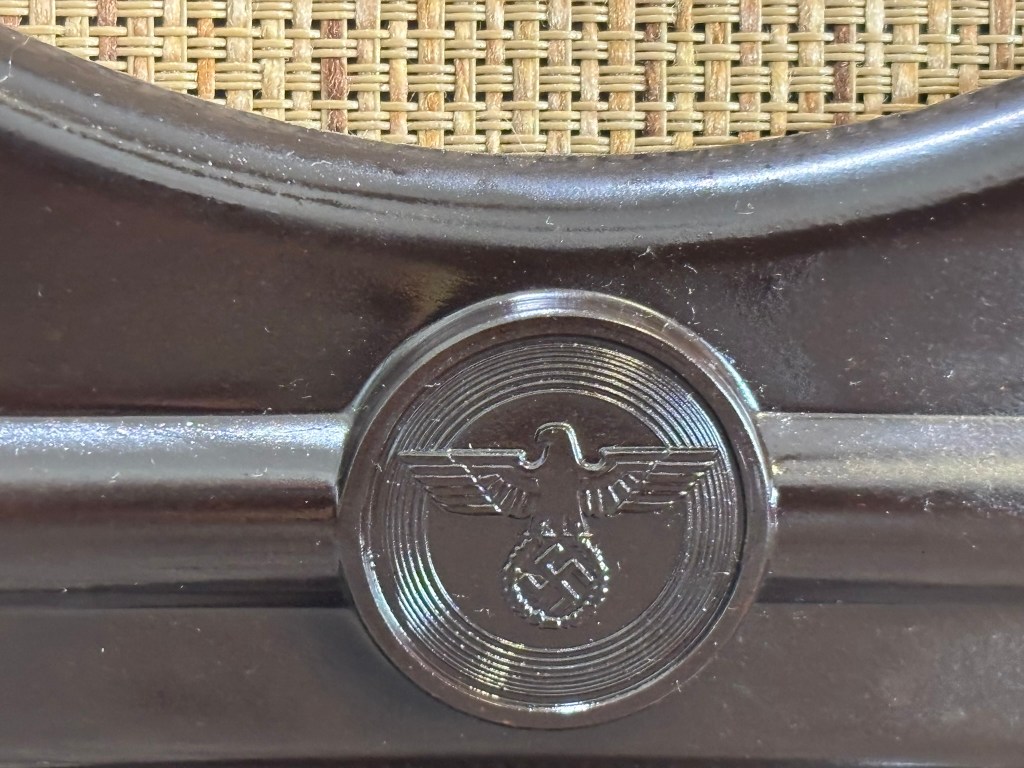
DISCLAIMER: I am not interested the Nazi’s, Hitler, or any of that nonsense. They committed terrible atrocities during the war. However I do collect and repair radios for a hobby, and I am interested in this for its historical and technical value. This sits next to a 1945 Crosly Navy “moral radio” from the war. The DKE 38 radio or Deutscher Kleinempfaenger (German Small Radio) was manufactured in 1938 by several different manufacturers, This particular one was made by Telefunken. Using only 2 tubes it was able to pickup both medium wave (AM or Broadcast) and long wave which is no longer used in the US. I have read that no shortwave was on German radios of the day to prevent people from listening to foreign broadcasts. From what I have read, these were designed to be simple and cheap so everyone could afford one, supposedly 35 Reichmarks or roughly $15 back in 1938. These were supposedly mass produced to spread the Nazi propaganda at the time and the common folk nicknamed them “Goebbles Schnauze” or “Goebbels Snout.” At any rate neat little radio. Jeff and I both have one, I decided to get this one working as a test as I have a German VE301 GW that is the older brother to this model that I want to get working. The Nazi Reichsadler is prominently displayed on the front of the radio and marked on many of the parts on the inside. I guess to leave no doubt to the German People who was in charge. There is hardly any metal at all in this radio as the chassis is phenolic, I assume the majority of the metal was directed to the war effort.
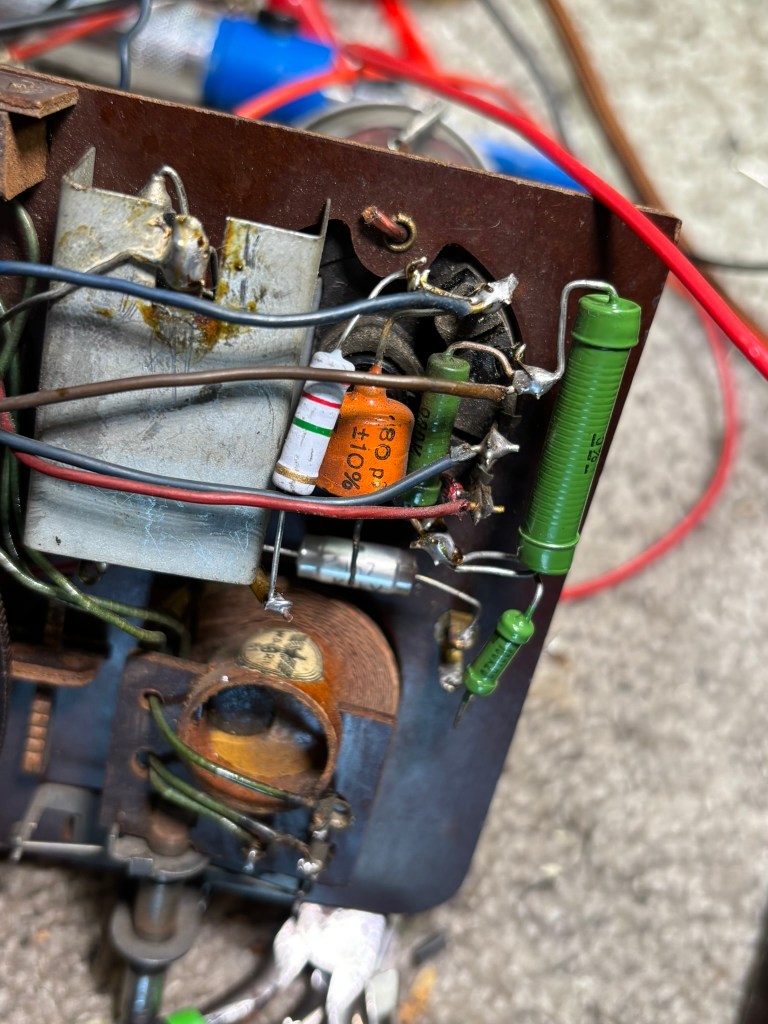
When I pulled the chassis, it was apparent that someone had been in it before. All of the wax/paper capacitors had been replaced some time ago (1960’s I am guessing by the look of the capacitors.

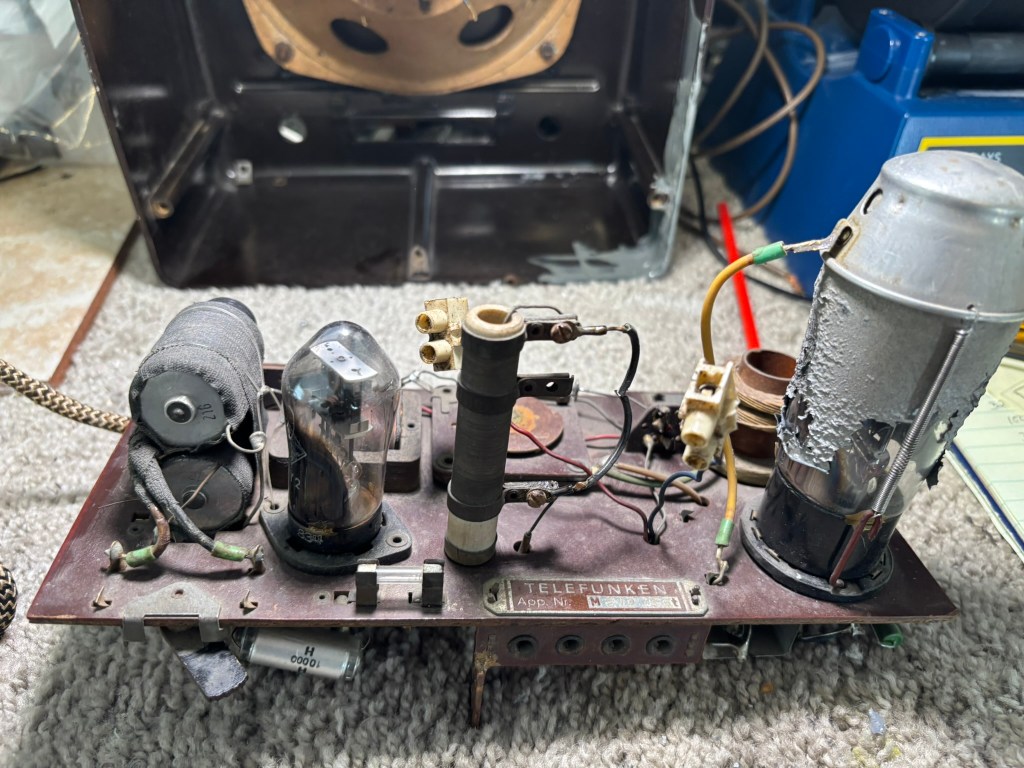
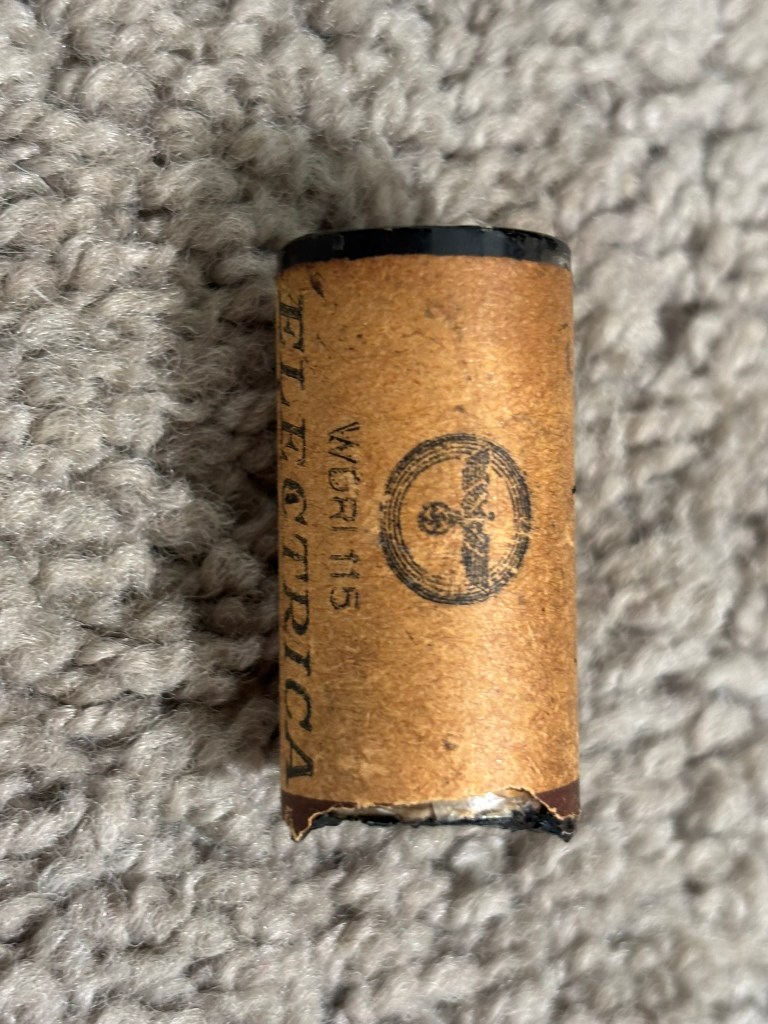
The two 4.7uf caps were the first to go as I didn’t want to ruin the VY2 rectifier tube as they are expensive and hard to find. And then the rest of the wax/paper caps. My plan was to salvage the wrapper of whatever original caps were left in the chassis as one of them still had the “Reichsadler” printed on it. But the wax/paper cap was encased in glass and then the paper wrapper glued on, no way to remove it without breaking the glass coating and ruining it. There was an extra .01 uf cap that was not on the schematic so I removed it, not sure why someone added it and the radio plays fine without it.
I powered it on at that point, but the rectifier tube didn’t light (the VCL11 has a zinc coating so I wasn’t looking to see if it lit up). I checked the filaments of the rectifier tube and they were good as well as the fuse. I found out that the power switch is a little wonky at best. In addition, this radio operates at either 220V, 150V or 110V by use of a tapped 2200 ohm resistor to drop the line voltage if not using 220V. The jumper insulation was crumbling and was replaced, but the corrosion on the taps was horrible and I had to use a little emory cloth to clean them up. After that, the radio powered up.
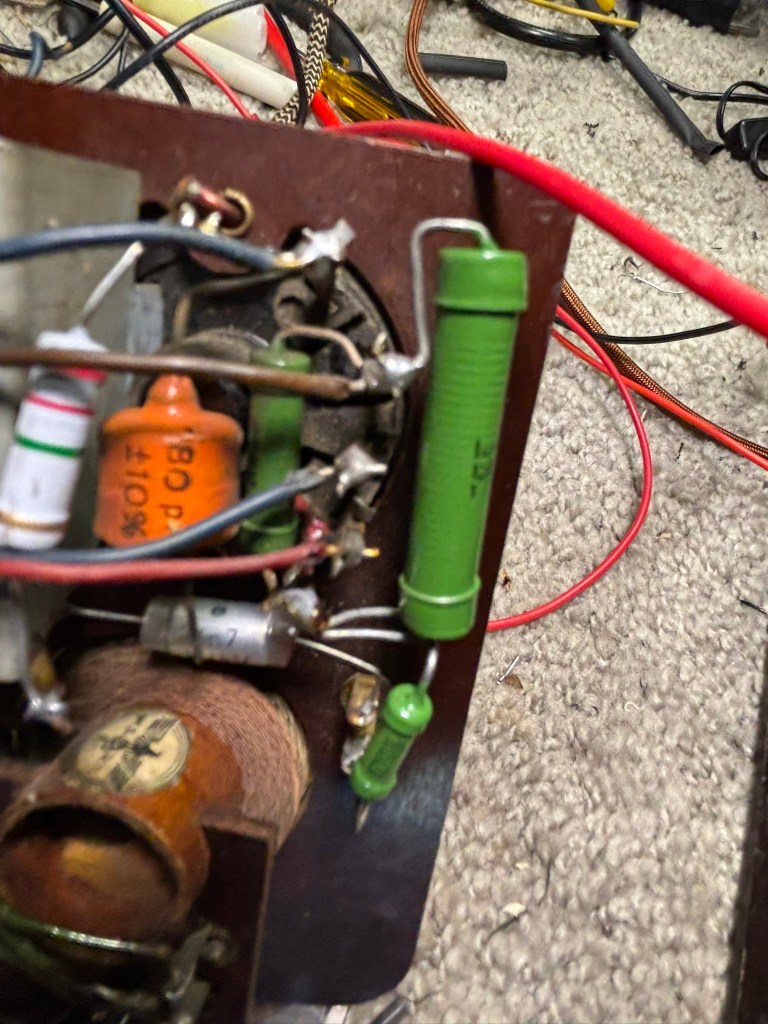
The volume was very faint and it seemed like something was making good connection because as I was turning the tuning wheel the pressure from my fingers would get a pop from the speaker and a little more volume. I resoldered all the connections I could see, replaced any resistors that were out of tolerance, sprayed the contacts of the tuning wheel capacitor with contact cleaner. It got a little better. I replaced the 2 small caps that were shielded under the VCL11 tube and the volume got better. I did a little digging on the web and read that running the radio on 220V gives better volume and the longer the antenna the better (anywhere between 18 and 90 feet depending on the station).
Tuning in a station requires a little patience as you need to use all three knobs per the instructions: tuning in a station with the Abstimmskala mit selbsttatigem umschalter (tuning scale with automatic switcher) adjusting the Ruckkoplung (feedback), and adjusting the Lautstarkeregler (volume control). The numbers on the dial go from 0 to 100, so they really don’t mean anything as far as you AM band, you find a station and thats the number. My local station here is 640KHz, 40 on the dial scale of this radio, I got it tuned in and left it. The case was repaired and not perfect, it’s OK, maybe I’ll look around for another, maybe not.

Below are pictures I took while working on the radio.







 Henson Brothers Old Tyme Radios